How to Evaluate Supply Chain Orchestration Tools With a Defensible ROI Target
The market for supply chain orchestration is filling up fast. Here is how to evaluate the tools on the one number you can defend: your own ROI.

A vendor demo shows a container rerouted around a port delay before anyone on the team has opened an email. It looks impressive. Then the questions start. What would that save us? How many of our shipments look like that one? And how would we prove it six months after go-live?
Those are the right questions, and most orchestration pitches are not built to answer them. Logistics leaders are being asked to choose between tools that all promise intelligence and automation, often with little more than a slide of headline percentages to go on.
This article sets out a practical way to evaluate supply chain orchestration on your own terms. It covers the four places where orchestration ROI comes from, how that value builds as you move from visibility to prediction to execution, and the questions to ask any vendor on your shortlist.
Why supply chain orchestration needs a defensible ROI target
Supply chain orchestration is one part of a bigger shift in logistics technology. Gartner forecasts that spending on supply chain management software with agentic AI capabilities will grow to $53 billion by 2030. New tools are launching every quarter, and nearly every vendor now leads with an AI story.
For operations and technology leaders at 3PLs, 4PLs, and BCOs, that creates a different problem. The question is no longer whether to invest in orchestration. It is how to tell which tool will make a measurable difference to your operation.
The most reliable filter is a defensible ROI target: one you can present to a board, model against your own shipment data, and validate once you are live. If a vendor cannot help you build that number, the AI story matters very little.
Read more: Three Principles That Separate Orchestration From Automation
The four drivers of supply chain orchestration ROI
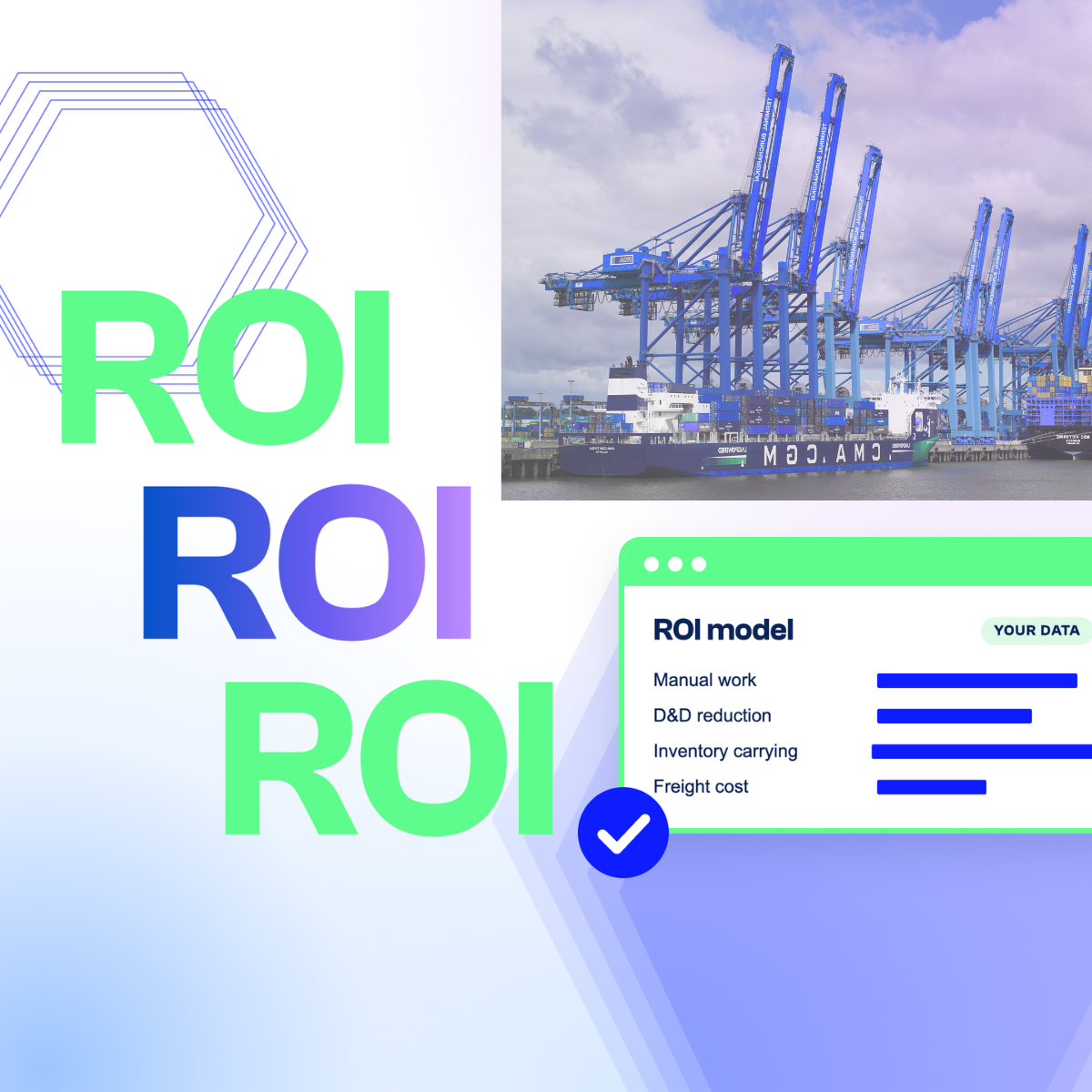
Across the scenarios we model with 3PLs, 4PLs, BCOs, and shippers, the value of supply chain orchestration consistently comes from four places. Not all four apply equally to every operation. Knowing where your value sits is the starting point for any evaluation.
1. Manual work elimination
Coordination teams spend a large share of their day on work that can be automated: chasing shipment status across disconnected systems, reconciling conflicting ETAs, and escalating exceptions by hand. This is where most supply chain automation starts, and where unified shipment visibility pays off first.
To size it, ask how many hours your team spends on status chasing and data reconciliation each week, and what the loaded cost of those hours is.
Read more: Unify Your Logistics Data Without Replacing Your TMS
2. Demurrage and detention reduction
Demurrage and detention (D&D) charges rarely stay contained. A missed port cutoff becomes a customer penalty. A customs delay becomes an inventory backup. Stronger supply chain exception management, backed by predictive intelligence, helps teams catch these issues while there is still time to act.
The value depends on your shipment volume, your baseline D&D incidence rate, and how early in the chain you can intervene. The earlier the warning, the more options you have, and the reduction compounds as you move from visibility to prediction to execution.
Related: Why Accurate ETAs Are Critical for Ocean Freight
3. Inventory carrying cost reduction
Safety stock exists because lead times are unpredictable. When a predictive ETA comes with a confidence score, planners can size buffers to the real risk on each lane rather than the worst case. Less inventory in the pipeline means lower carrying costs and better cash flow.
For shippers and large BCOs, this is often the biggest number in the business case, and the one CFOs ask about first.
4. Freight cost optimization
Carrier performance management depends on reliable data. With a clear view of which carriers perform best on which lanes, teams can make better decisions on routing, consolidation, and mode selection, and over time automate the decisions that follow. The headroom depends on how locked-in your contracts are, but it is rarely zero.
How the value compounds across each layer
These four drivers do not operate in isolation. Moddule is built as three layers, and each one adds to the value of the last:
- Visibility Platform: ingests and unifies shipment data from carriers, partners, and existing systems into one trusted view.
- ETA IQ: ML-driven predictive milestone intelligence with confidence-scored ETAs, currently in pilot with two global fashion retailers.
- Moddule OS: the autonomous execution layer in development, designed to sit above your TMS, WMS, and ERP, surface the right action, and carry it out within guardrails you define.
Moddule OS follows a trust graduation model: Recommend, then Act, then Autonomous. Teams start with recommendations, approve actions as confidence builds, and hand over routine decisions only when the track record supports it.
Read more: The Trust Graduation Model Behind Autonomous Execution in Logistics
Questions to ask any orchestration vendor
Use the four drivers to pressure-test any tool on your shortlist:
- Which of the four ROI drivers does your product address, and how do you measure each one?
- Can you model the business case against our own shipment data before we commit?
- How will we validate the numbers once we are live, and over what timeframe?
- Does the tool sit above our existing TMS, WMS, and ERP, or does it require replacing them?
You Might Also Like: The 90-Day Path to Proof for AI Logistics Tech