Why a Pilot for Supply Chain Orchestration Technology Safeguards Your Investment
A structured pilot evaluates software on your own live data before you commit to an orchestration contract.
.png)

If you are evaluating orchestration technology for your organisation, a demo is not enough to justify the decision for the volume and revenue running through your operation. You don't go from zero to a hundred on a decision like this. You earn the right to that next step in stages, and you should expect any serious vendor to understand why.
This is why a structured pilot sits at the centre of how Moddule works with enterprise customers on predictive intelligence and orchestration, and why I think it should be the standard way you buy this category of technology in 2026.
The confidence gap is real, but not surprising
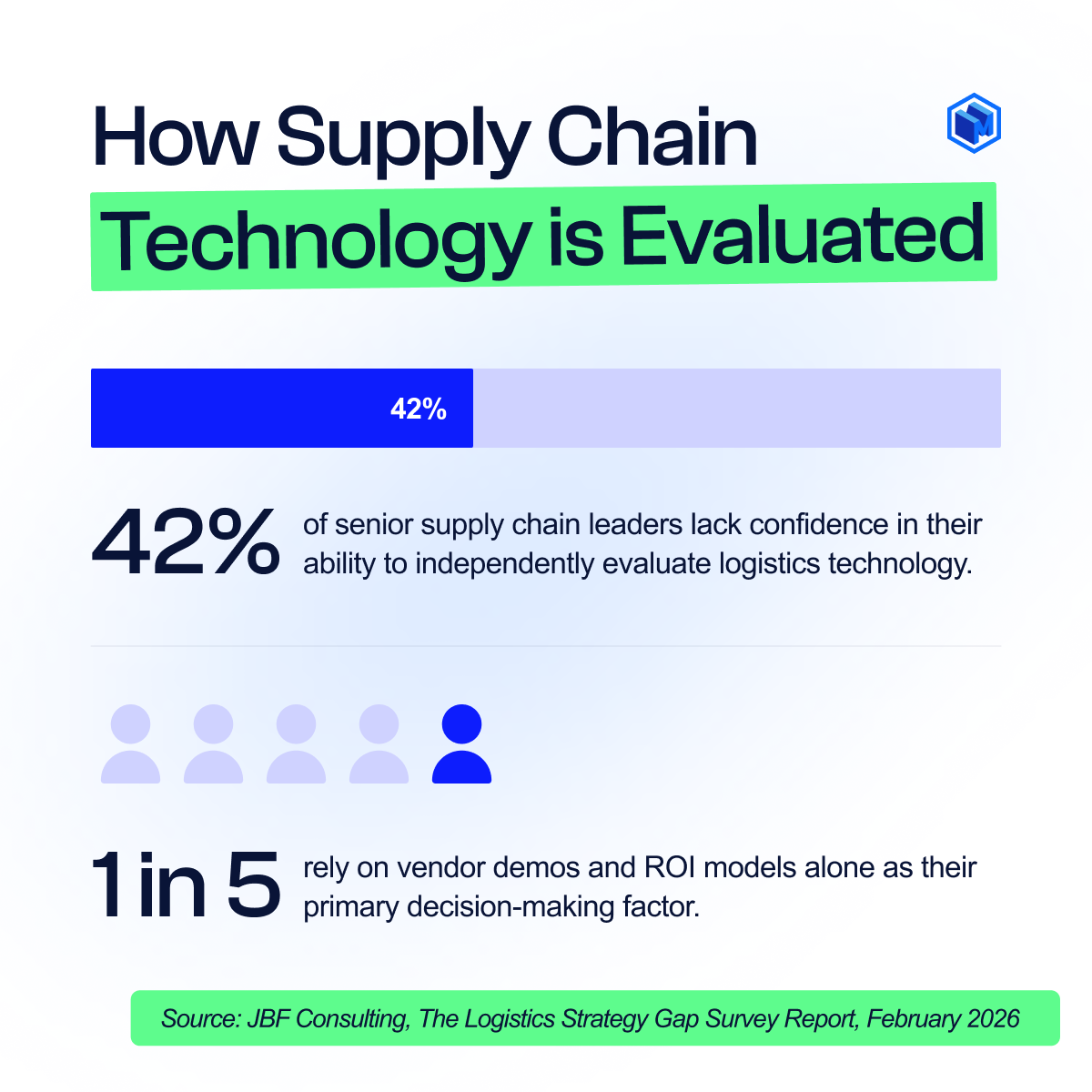
A recent report found that 42% of senior supply chain leaders lack confidence in their organisation's ability to evaluate logistics technology, and close to one in five rely primarily on vendor-supplied demos and ROI models as their main basis for purchasing.
These numbers don’t surprise me. In part, it comes down to who's selling it. A lot of the technology comes from people outside this industry. They're thinking about the problem purely from a technology standpoint rather than from the floor of a warehouse. That's a trust element in itself, that if a vendor hasn't lived inside the problem, a demo is the only way they know how to sell it. A pilot will show you they actually understand the problem, not just the technology.
Visibility has become a commodity
When we started Moddule, the first thing we built was an end-to-end visibility platform that unified fragmented data across transportation modes. That was genuinely needed at the time, and still is, but visibility has become more of a commodity over the last few years. While more platforms can give you a view of where your freight is, the quality of the data hasn’t yet been validated.
A lot of the aggregators that visibility platforms rely on simply aren't that good. You can take one container and track it seven or ten different ways and get a different answer each time. Your planning team ends up running a manual process just to figure out where a container actually is, because they need to know before they can confirm pickup, customs clearance, and warehouse delivery.
This is exactly why we built ETA IQ as a deliberately scoped pilot, focused specifically on ocean freight arrival accuracy: closing the gap between the estimated time of arrival and the actual time of arrival. Most systems are running somewhere around 60 to 70 per cent accuracy on that gap. We want to get that north of 90 per cent before anyone should trust a platform to act autonomously on top of it.
Logistics organisations spend roughly 75 per cent of their cost base on people, which is exactly why everyone wants to automate as much of this as they can. But you can't automate responsibly on top of data you can't rely on.
The benefits of a structured pilot
A pilot gives you a low-risk way to trial emerging technology without full commitment up front:
- You get to see whether the platform performs on your data, your trade lanes, and your operational reality.
- It gives you significant influence in how the product develops.
- You don't have to build the internal technical capability to evaluate or run this yourself.
- Working with a partner who understands both your business and the technology means you can lean on that partnership rather than staffing up a team.
That's, ultimately, how the confidence gap closes for you specifically. You're not being asked to trust a piece of software in the abstract. You're working with a partner who speaks the same operational language you do, on your own data, before you've committed to anything.
Why Moddule is built in this order
Visibility, then trustworthy data, then orchestration aren’t really three separate buying decisions, but two. We built the unified visibility layer because supply chain leaders needed a single view across a fragmented set of systems. The work that actually lets you automate anything responsibly is proving that the data can be trusted. Once that trust is established, the case for orchestration on top of it becomes a much smaller leap.
A well-run pilot follows the same logic for the customer relationship that we followed in building the product. Prove the data is trustworthy before you act on it, and you’ll have a system you can actually depend on.
You Might Also Like: From Visibility to Orchestration: Moddule’s Product Roadmap.
The window to get in early is now
Moddule is currently running a pilot for predictive intelligence with one of the world's largest global retailers, validating ocean freight arrival accuracy against their own shipment data.
We're extending the same opportunity to a limited number of enterprise supply chain leaders right now. If you're evaluating orchestration technology and want to see how it performs against your own data before committing to anything, Moddule is open to structured pilot engagements for both ETA IQ and Moddule OS, built specifically around your environment. Get in touch to learn how.