Supply Chain As a Competitive Advantage: Why I Founded Moddule
Moddule CEO and Founder Hans Elmegaard shares why he believes supply chain is a competitive advantage, not a cost center.


I have spent three decades in logistics, and for most of that time, the industry treated supply chain as a cost to manage rather than a capability to invest in. I founded Moddule in 2022 because I believe that is backward. A supply chain built on data you can trust is one of the last real competitive advantages in global trade.
The silent fixer of global trade
I have now spent 29 years in logistics across Maersk, DSV, Agility, Panalpina, and Scan Global Logistics. For most of that time, the industry treated supply chain as a cost to manage rather than an asset to invest in. I founded Moddule in 2022 because that backward mindset has to change. A supply chain built on trustworthy data is one of the last real competitive advantages in global trade.
My father worked in shipping, and since I was five years old, I heard him call it the silent fixer of global trade. After military service, I became a shipping trainee. Working across Asia, Europe, and North America taught me how global supply chains actually function on the ground.
Why I left the corner office
Leaving the corner office in 2022 wasn't a young founder's impulsive leap. After decades in senior leadership, with a young family, it was a calculated risk.
COVID put supply chain on everyone's radar, moving freight rates from back-office details to dinner table conversations. When I lost my father in 2021, it brought a lot into focus. If I didn't try to build what I knew logistics actually needed, I would regret it. So in June 2022, I started Moddule.
Supply chain is a competitive advantage, not a cost center
For too long, supply chain lacked a seat at the executive table. Big strategic calls got made first, and logistics found out afterward.
That is finally changing. Organizations investing in logistics technology use supply chain as a competitive advantage instead of a quarterly cost-cutting exercise. Arrival reliability now matters more than raw speed across ocean freight.
The gap I kept seeing: more data, not enough trust
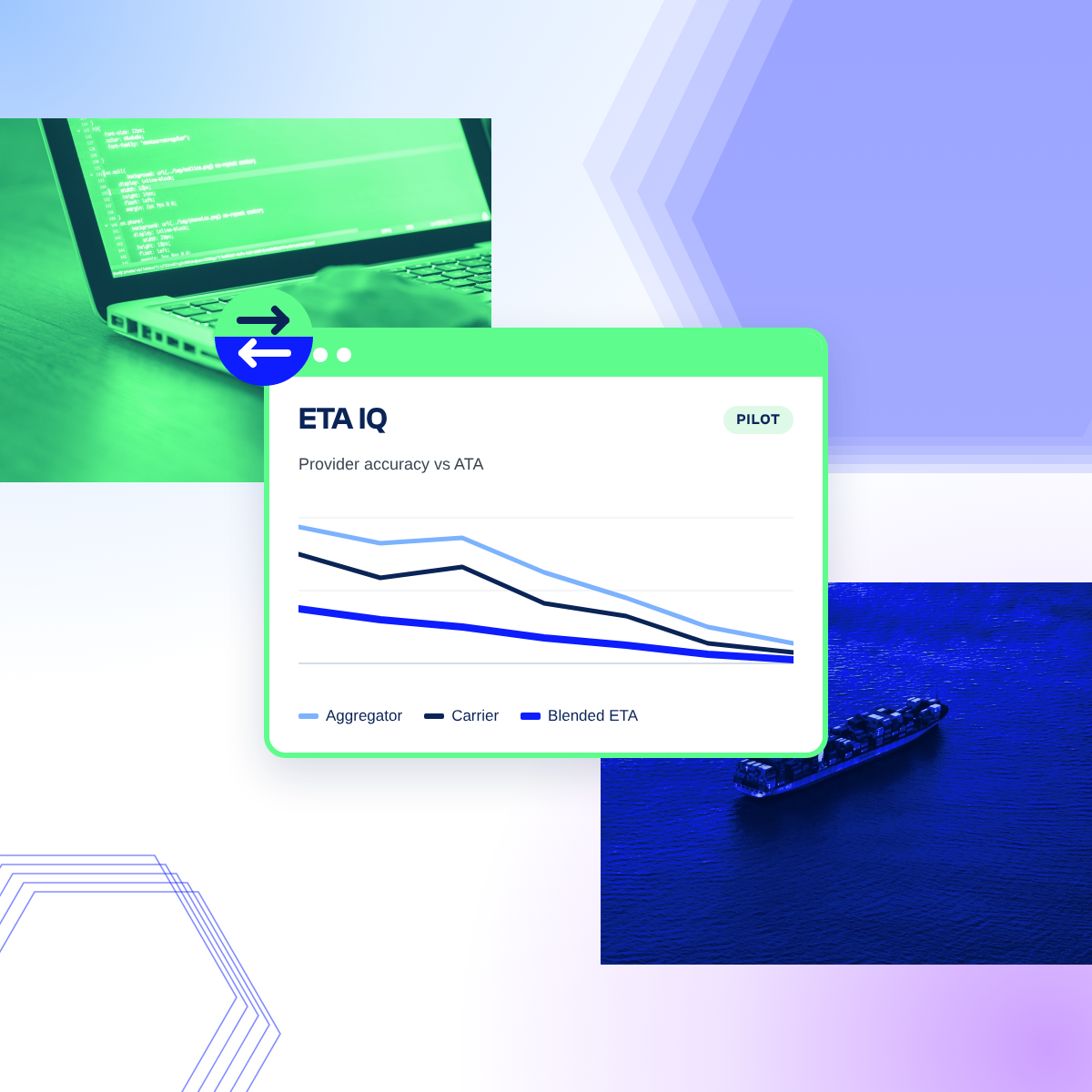
Most companies already have a visibility tool. You can track the same container seven different ways and get seven different answers. What is missing is trust in the underlying data.
Speed mattered a decade ago. Today, reliability is what counts more. You cannot apply AI or orchestration on top of fragile data. Automating a broken process just moves the risk downstream and makes exceptions more expensive. That is why our core job at Moddule is simple: we sell trust.
Related: Logistics Visibility Software: Savings You Can See Quickly
Why Moddule is built to be agnostic
Years ago in a QBR with a major retailer, someone asked why we needed so many disconnected systems just to move goods from origin to shelf. The honest answer was that our internal systems didn't talk to each other.
The logistics industry grew through acquisitions, leaving companies locked into rigid operating systems. We built Moddule to sit on top of your existing tech stack, agnostic to whatever TMS, WMS, or ERP you run. You don't need to rip out your core systems to work with us.
We didn't build this from the outside. We have sat in those chairs, managed those P&Ls, and dealt with the same fragmented data every day. Our goal isn't to replace your staff; it's to give logistics professionals better tools to do work we respect.
More like this: The Two-Sided Case for a Pilot in Supply Chain Orchestration
Where we go from here
Moddule delivers a single unified view across carriers and modes, backed by trustworthy data. From there, we move into more predictable milestones and supply chain orchestration, automating the manual handoffs that drain industry resources.
Companies that treat supply chain as a core capability rather than a line item will win over the next few years. That is the bet I made when I left the corner office, and it is the standard Moddule is built on.