Orchestration Takes Logistics Professionals From Driver to Director
The logistics software industry has spent decades designing platforms for people who click buttons. That era is ending as we move towards directed autonomy.

For thirty years, enterprise logistics platforms have been built around one unchanging purpose: you log in, see information, sometimes click to take action, and then move on. The interfaces have improved, but the fundamental role of technology in the supply chain has stayed the same. The platform was a tool for manual execution. That era is ending because the job itself has changed.
The problem is no longer visibility
The logistics industry has spent a decade solving the visibility problem. Most enterprise operators today have invested heavily in tracking and real-time data. They know where their freight is and have arrival predictions. The problem is no longer simply seeing what's happening. Instead, it’s coordinating action across fragmented systems fast enough to make a business impact.
Here’s an example: when an ocean container arrives two days late in Felixstowe, someone opens the TMS to check downstream shipments. Someone else calls the warehouse. A third person updates the ERP. A fourth sends customer notifications. If demurrage exposure has changed, costs need recalculating, and a collection plan triggered. That is five systems, four people, and one piece of information.
This is an orchestration gap, and it is filled entirely by human effort.
Headcount is your profitability ceiling
For 3PLs, freight forwarders, and shippers, people costs consume 50 to 70 percent of operating expenses. Labor is the backbone. In an industry moving trillions in cargo annually, scaling has meant one person coordinating hundreds of shipments, each requiring dozens of manual decisions.
Here's the hard truth: if people are 50 to 70 percent of your cost base, and you need to improve margin, you have two choices. You can hire fewer people per shipment, or you can reduce the headcount required to manage the same volume.
Automation has been the industry's answer for years. Automation executes rules: send alerts, update statuses, flag exceptions. It saves time. But it doesn't change the fundamental challenge. When a shipment can have multiple different ETAs coming from different providers, automation can't decide which one to believe without rules. A person has to step in to make a call, and that person is expensive, and they're still your bottleneck.
Orchestration is different because orchestration makes decisions.
An orchestration platform ingests fragmented data, scores its trustworthiness, and surfaces the right action in real time. It’s able to weigh competing signals. It knows that Carrier A has a better on-time record than Carrier B, that this particular route runs four days faster in May, and that your warehouse is approaching capacity. And it acts across your systems in seconds.
When orchestration works, you need fewer people making low-value decisions. The platform eliminates the coordination and exception wrangling. What's left is the irreducible work: relationships, strategic exceptions, customer conversations. That's margin expansion.
You Might Also Like: Navigating Skepticism to Build the AI-Powered Supply Chain of the Future
From driver to director
But most technology providers get this wrong. They build powerful automation and surface it through the same clicking interface designed for manual execution. You get a system capable of acting autonomously, wrapped in a UI that assumes you want to click everything yourself.
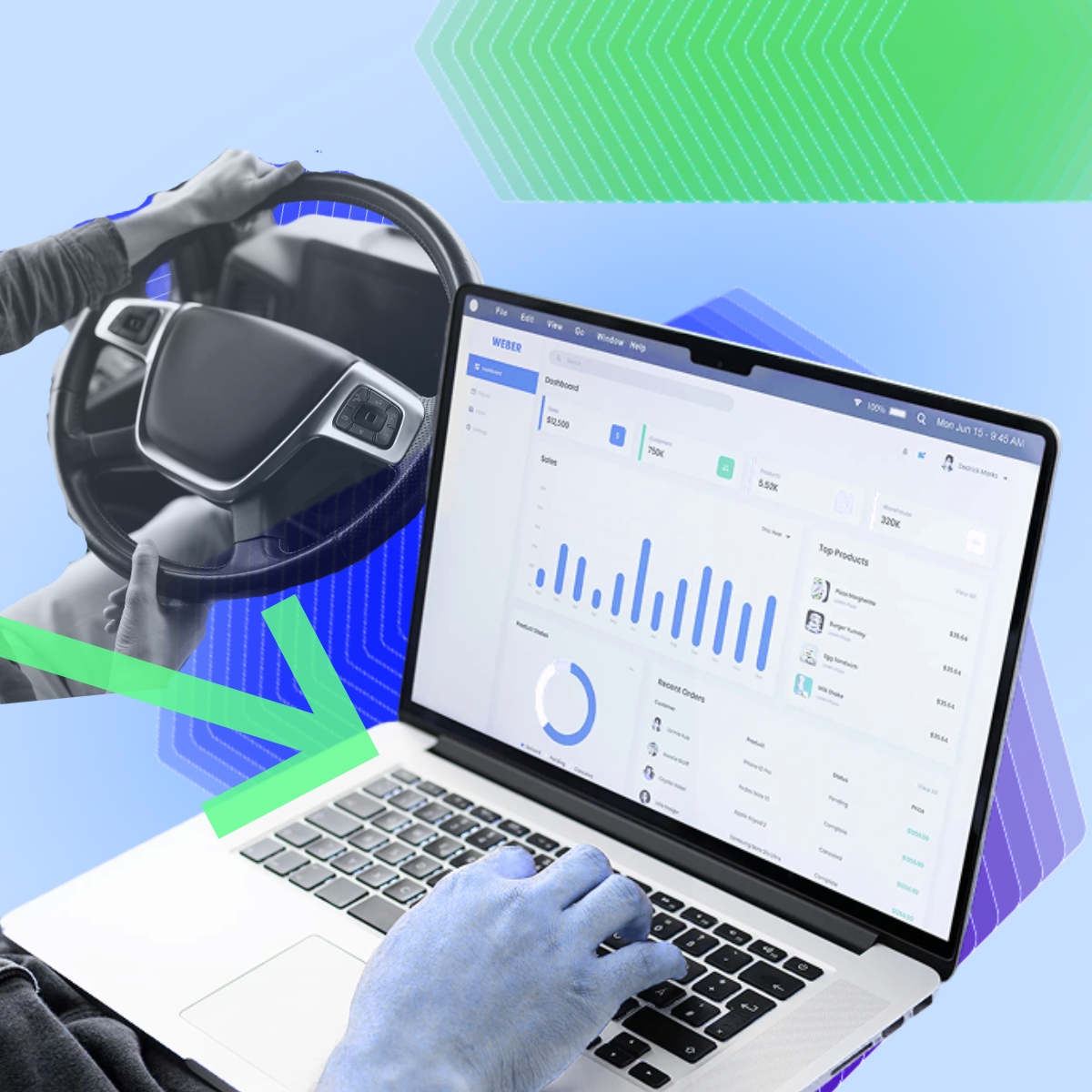
The difference is architectural and needs to be considered in the build of an orchestration platform. A user of a traditional logistics platform is a driver. Each click they take produces a visible response, with an immediate and transactional feedback loop.
A user of an orchestration platform is a director. They set intent, observe execution, and make judgment calls about whether the platform's behavior reflects their goals. The feedback loop is evaluative. The platform is an intelligent agent working on their behalf.
The difference is significant. As a driver, you feel every turn. As a director managing a driver, you need a map, an ETA, trust in the route, and a clear way to intervene if something goes wrong.
Closing this gap requires three principles:
- Intent over instruction: A director should be able to say, "Prioritize on-time performance over cost on this corridor this quarter," and have that intent propagate through every decision the system makes. Not step-by-step rules.
- Legibility at the right altitude: A VP needs to know the system made 847 decisions, saved $14K, and flagged one requiring human judgment. They do not need ETA confidence scores on every shipment. An operations manager needs the opposite: specifics and reasoning.
- Graduated trust, not binary control: A 3PL might trust their platform to swap carriers on well-understood lanes but require sign-off when changing commitments to tier-one customers. Trust is earned in specific contexts, with clear boundaries you can adjust.
Read More: See How Moddule's AI-Powered Intelligence Suite Can Change Your Operations
What this means for your operations
Moving from driver to director requires developing trust in a system acting on your behalf, not a tool you're controlling.
That’s why it’s key to start with a graduated trust model, where the system makes recommendations, and your team evaluates them. You observe that the recommendations are consistently good, and over time, authorization boundaries expand. The platform earns the right to act.
The companies that figure this out first win
Supply chain orchestration isn't a replacement for your people. It's the removal of a structural constraint that's been keeping them locked in triage mode. It's permission to ask whether your best talent should spend their day reconciling data or building customer relationships.
For logistics professionals ready to scale, that's the frontier. Not more people or incremental automation. Intelligence that reads your data, makes decisions, and acts across your systems automatically.
The companies that figure this out first will have the most efficient operations, the most engaged teams, and the margin to grow.
The driver era is ending. The era of directed autonomy is here.
Learn More: Announcing Moddule’s Product Roadmap That Takes You From Visibility to Orchestration