The Strategic Buying Guide to Logistics Visibility Software in 2026
The market is saturated and the "technology conundrum" is real. Here's how to cut through the noise.


Logistics service providers need clear criteria to evaluate software that will deliver ROI. Based on three decades of supply chain experience, here are the six lenses that matter in 2026.
1. Cost and transparency
Most buyers focus on license fees and ignore everything else. That's the mistake.
True ROI comes from predictable pricing with zero hidden fees. Too many providers bury costs in support contracts and mandatory upgrades. You need a fixed monthly fee for accurate forecasting and to avoid budget surprises.
2. Platform integration
Your business runs on a fragmented stack. ERP, TMS, WMS, and spreadsheets holding it together. Don't buy software that makes this worse.
Look for carrier-agnostic platforms that integrate third-party solutions seamlessly. Your tech stack will evolve. Choose a platform flexible enough to swap systems and carriers without a six-month integration project.
3. Modular implementation
Implementation shouldn't disrupt daily operations. Full system replacements create disruption. Phased rollouts minimize it.
Find providers who act like partners, not vendors. They should offer modular implementation that lets you go live in stages, reducing technical complexity and keeping your business running smoothly.
Related: Here's How to Unify Your Logistics Data Without Replacing Your TMS.
4. Customer experience
Your software impacts your internal team and your customers. The platform must work for both.
If your customers don't want to use it, the solution has no value. A white-labeled platform that delivers instant visibility and clean data earns trust. That trust drives retention.
5. Long-term scalability
Avoid fully custom builds that require extensive bespoke development. They're expensive, slow to implement, and impossible to scale.
The strongest platforms offer personalization tools that grow with your business. You should be able to control what data gets displayed and adapt to different service types without writing a single line of code.
6. Seamless data connectivity
This is the most significant shift we're seeing this year: replacing a system is not always the answer to a data problem.
Too many logistics professionals try to fix broken workflows by replacing their entire TMS. They spend months on implementation, only to find the same data silos in a different wrapper. The problem wasn't the system. It was the data flow.
In 2026, the focus is on getting data where it needs to be. We're seeing a massive rise in multi-system environments where logistics professionals bridge data between different TMS platforms like CargoWise and Descartes simultaneously.
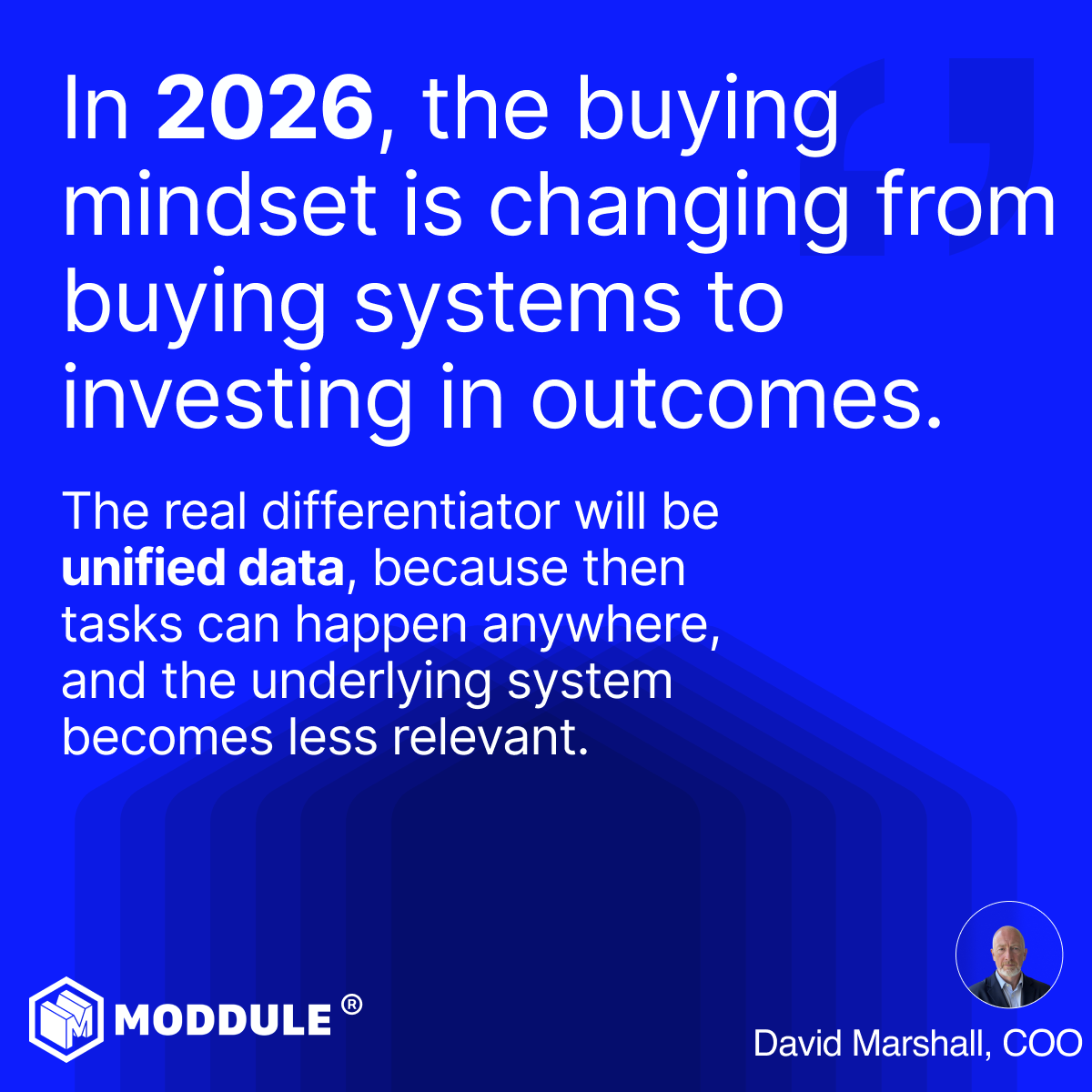
Unified data is the goal
Stop the rip-and-replace cycle: Instead of buying a new system to fix a data flow issue, invest in a data layer that normalizes information across your existing stack. Work with what you have. Make it work better.
The single pane of glass: Your technology should unify disparate internal systems into a single, customer-facing portal. Shipment management should be simple, regardless of where the data originated.
Actionable intelligence: Data is only valuable if it's interoperable. Ensure your software can handle the edge cases of logistics automation. Otherwise, data errors will kill your efficiency gains.
The bottom line
Choosing a platform in 2026 doesn't have to feel like a gamble.
Prioritize cost transparency, simple integrations, and the ability to normalize data across your entire tech stack. Do that, and you can confidently select a solution that solves today's challenges while positioning your business for tomorrow's opportunities.